
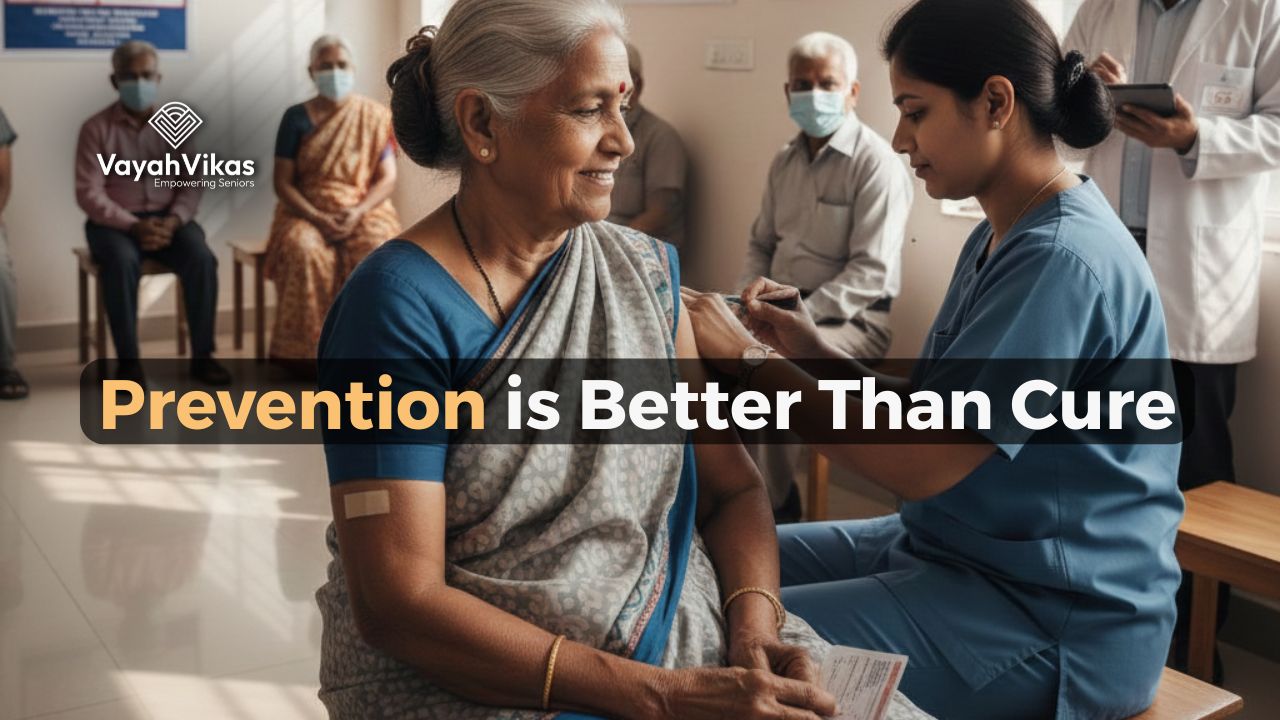
Why Adult Vaccination Must Be Central to Senior Wellness in India
As India ages rapidly, senior wellbeing must be reframed from episodic care to preventive, system-level action. Adult vaccination sits at the heart of this shift, yet remains one of India’s most neglected public health gaps.
This is not a demand problem. It is a systems problem.
The scale of the ageing and vaccination gap
India has an estimated 152 million adults aged 60+ in 2025, projected to reach 347 million by 2050 (UNFPA, LASI). Yet adult vaccination coverage remains alarmingly low.
Among adults aged 45 and above:
- Influenza vaccination: 1.5%
- Pneumococcal vaccination: 0.6%
- Hepatitis B vaccination: 1.9%
- (National POLYVAX Study, 2023)
Over 20 million older adults suffer recurrent respiratory infections each year (LASI 2020).
India has an ageing population, a disease burden, and the evidence.
What it lacks is a structured adult vaccination system.
Why vaccination is foundational to active ageing
From an active ageing and senior wellness lens, vaccination directly supports:
- Mobility and functional independence
- Reduced hospitalisation and recovery time
- Continued participation in family, work, and community life
- Lower caregiver and health system burden
Preventive care protects not just health, but agency and dignity in later life.
The cost of not vaccinating seniors — quantified
Hospital and healthcare costs
A single episode of hospitalised pneumonia in an older adult costs:
- ₹65,000 to ₹2,50,000 or more in private tertiary care
- ICU admission adds ₹40,000 to ₹70,000 per day
- Average hospital stay: 7–12 days
- One in three cases requires post-discharge rehabilitation (LASI)
A ₹2,000–₹8,000 pneumococcal vaccine can prevent treatment costs running into multiple lakhs.
Respiratory infections account for around 10% of inpatient admissions among seniors in government hospitals (MoHFW). Vaccination can reduce severe pneumococcal disease by up to 80%.
Global cost-effectiveness models show:
- Every ₹1 invested in adult vaccination saves ₹20–₹50 in direct and indirect healthcare costs (WHO, OECD)
- Each influenza vaccination prevents 0.2–0.5 DALYs in older adults (Lancet)
As India’s 80+ population doubles between 2030 and 2045, the public cost burden will rise sharply without preventive action.
Family and economic impact: India’s hidden cost
India’s ageing challenge is uniquely familial:
- 78% of healthcare spending is out-of-pocket (NHA 2023)
- Respiratory illness pushes 6–8% of families into catastrophic health spending every year (IHME)
- Adult children lose workdays, income, and productivity
- Women are disproportionately affected, often withdrawing from the workforce to provide care (S&P Global 2024; Vayah Vikas Survey 2025)
Vaccination is not only a health intervention.
It is a family economic stabiliser.
An emerging link: Vaccination and cognitive health
New international research adds an important dimension to the case for adult vaccination. Studies show that seniors vaccinated against influenza and pneumococcal disease have an approximately 14 percent lower risk of developing dementia, with a 25 to 30 percent reduction in Alzheimer’s incidence observed over five to ten years (UK Biobank 2023; JAMA Neurology). Dementia is already the most expensive chronic disease globally, and India remains particularly unprepared for the scale of its future economic, healthcare, and caregiving impact.
Bridging the affordability gap: Vayah Vikas in action
Recognising that many older adults are forced to choose between daily essentials and preventive vaccines, Vayah Vikas has stepped in this year to raise funds for influenza and pneumonia vaccines for deserving seniors.
The aim is simple:
No senior should be denied preventive protection due to cost.
Support this initiative here:
https://tcsw10kuwbe.org/donate?ngoId=6870c2b6-4e2a-4c19-8a96-83d585cd085f
A clear policy message emerges from this reality. If India is serious about enabling active ageing and healthy longevity, building age-inclusive workplaces and communities, reducing avoidable healthcare expenditure, and protecting families from economic fragility, then adult vaccination can no longer be viewed as discretionary or optional care. It must be recognised as essential preventive infrastructure, embedded as a core pillar of senior wellness programmes, and treated as a shared responsibility across government, healthcare systems, corporates, and civil society.
The bottom line
Active ageing is sustained not by engagement alone, but by protecting health before decline begins.
Adult vaccination is one of the most evidence-backed, cost-effective, and dignity-preserving investments we can make for India’s seniors.
That is age inclusion in action.