
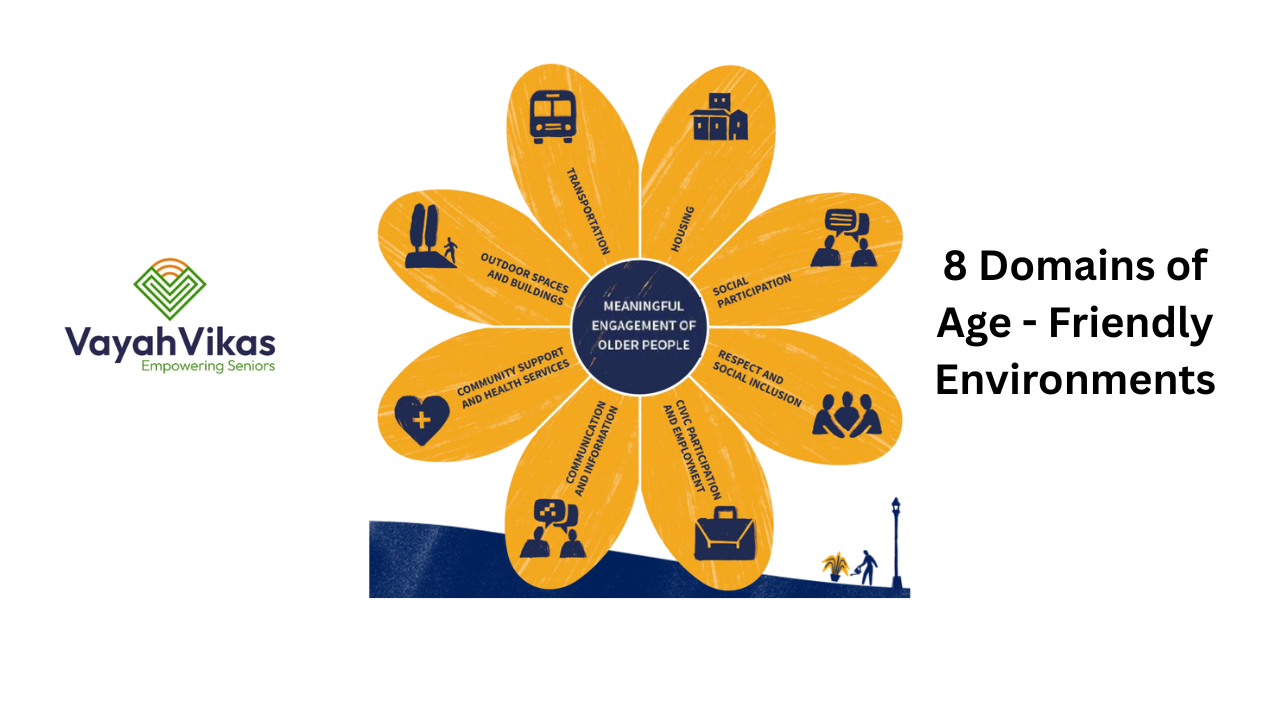
This thought piece is inspired by an insightful webinar by Thiago Herick de Sá, Technical Officer for Age-friendly Environments at the World Health Organization. His reflections offer a powerful lens through which we can understand what it truly means to create societies that support people as they grow older.
We are living longer than ever before. Yet longevity alone is not the success story we often assume it to be. The more important question is what kind of lives we are enabling in those added years.
The idea of age-friendly environments shifts the conversation from ageing as an individual experience to something shaped by the world around us. It recognises that growing older is influenced not just by health or personal circumstances, but by the environments we move through every day.
Beyond Healthcare: The Environment as Enabler
Ageing well is not limited to access to healthcare. It is deeply connected to the spaces we live in and the systems we interact with.
The WHO describes environments as everything that forms the context of our lives. This includes our homes, neighbourhoods, transport systems, social connections, policies, and services. Together, these determine whether an older adult can remain independent and engaged or becomes isolated over time.
A broken sidewalk, an inaccessible bus, or even dismissive attitudes towards ageing can quietly reduce quality of life. On the other hand, thoughtful design and inclusive thinking can extend independence and dignity in very real ways.
What Makes an Environment Age-Friendly?
At its heart, an age-friendly environment allows older people to live with choice, dignity, and connection. It enables them to:
- Stay in a place that suits their needs
- Maintain independence and mobility
- Remain socially connected
- Continue contributing to their communities
- Pursue personal wellbeing and growth
These are not abstract ideals. They are practical outcomes of environments that are intentionally designed to include.
Importantly, these environments benefit everyone. When barriers are removed, accessibility improves for all age groups and abilities. Communities become more inclusive and resilient as a whole.
The WHO’s Global Vision
Under the UN Decade of Healthy Ageing from 2021 to 2030, creating age-friendly environments is a central priority. The WHO has also built a Global Network for Age-friendly Cities and Communities that now includes members across more than 60 countries, all working towards making their cities better places to grow older.
The approach is structured but grounded in real life:
- Engage older people directly in decisions that affect them
- Plan based on lived experiences
- Implement across areas like housing, transport, and social participation
- Continuously evaluate and improve
A key principle stands out. Nothing about older people should be decided without their involvement. They are not passive recipients of care but active contributors and leaders.
The Everyday Reality of Age-Friendly Living
The idea becomes clearer when we look at daily life.
Can an older person step out of their home safely?
Is public transport easy to use without assistance?
Are there spaces where they feel welcome and included?
Are services designed with respect and accessibility in mind?
When these questions are addressed thoughtfully, ageing becomes a phase of continued participation rather than withdrawal.
Why This Matters for India
India is ageing rapidly, and our systems are still catching up. Much of our infrastructure continues to be designed with younger populations in mind.
Without timely action, longer life spans may lead to greater isolation rather than fulfilment.
At the same time, this moment offers an opportunity. By embedding age-friendly thinking into urban planning, public policy, and community initiatives, India can build environments that support people across all stages of life.
The Role of Community-Led Efforts
This is where organisations like Vayah Vikas become essential.
Creating age-friendly environments is not only the responsibility of governments. It is built through community action, awareness, and participation. Initiatives that bring older adults together, improve access to services, and promote engagement all contribute to shaping a more inclusive ecosystem.
The goal is not just to support older adults, but to rethink how society includes them.
A Shift in Perspective
Ageing is often seen as a challenge to manage. The WHO’s framework encourages us to see it differently. It invites us to view ageing as an opportunity to design better environments for everyone.
When we create spaces where older adults can live well, we are building communities that are more thoughtful, accessible, and humane.
The real question is not whether we can create age-friendly environments.
It is whether we are willing to prioritise them.