
India is on the cusp of one of its most significant demographic shifts, and at Vayah Vikas, this is the transition we work towards every day.
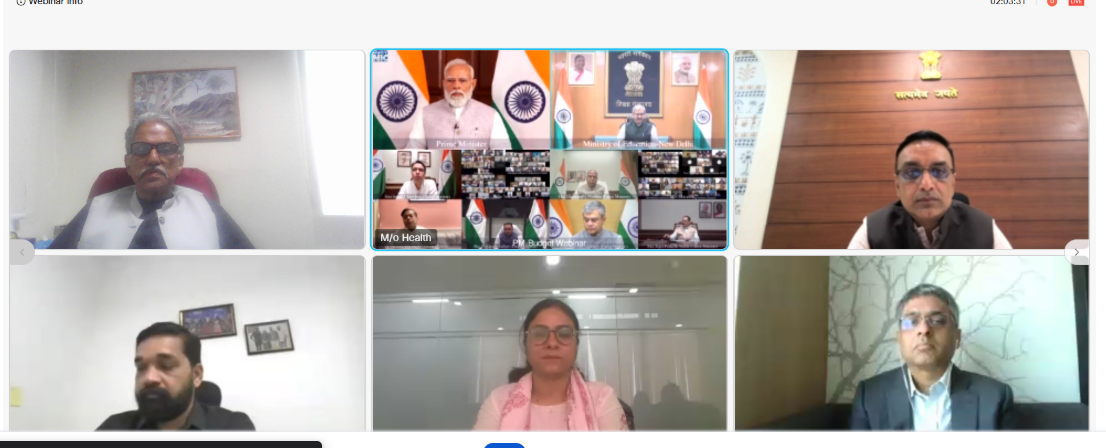
We were honoured to represent the voice of India's seniors at the Government of India's Post-Budget Webinar on the Care Economy, inaugurated by the Hon'ble Prime Minister. We commend the Government for its forward-thinking leadership in convening this dialogue and bringing together practitioners, policymakers, and changemakers working at the frontline of senior empowerment and care.
Vayah Vikas was represented by Dr. Alexander Thomas, Founder and Patron of the Association of Healthcare Providers India, ANBAI, and CAHO, and Founding Governing Board Member of Vayah Vikas, who brought decades of healthcare leadership and on-ground insight to the conversation.
The demographic reality is clear.
By 2036, India will be home to over 230 million senior citizens. The demand for home-based care, rehabilitation, long-term support, and companionship services will grow at a scale this country has not yet experienced. The question is not whether this transition is coming; it is whether we will be ready for it.
Traditionally, elder care has been sustained within families. But urbanisation, migration, and shifting family structures mean that families today increasingly need trained, professional caregiving support, and they need it within their own communities.
The Union Budget's commitment to train 1.5 lakh caregivers is a welcome and necessary step. Realising that commitment at scale, however, will require sustained collaboration across government ministries, skill development councils, healthcare institutions, private sector partners, and community organisations.
Three priorities will be foundational to building a caregiving ecosystem that endures:
Professionalisation and standardisation. Caregiving must be recognised as a skilled profession, supported by structured curricula, nationally accredited certification, and career pathways aligned with established skill frameworks. The sector cannot scale on goodwill alone.
Community-rooted delivery models. Training caregivers within the communities they serve, and connecting them to local service networks, enables responsive, trusted care for seniors while generating dignified livelihood opportunities, with particular potential for women's workforce participation.
Recognition, compensation, and career progression. Sustainable workforce growth depends on caregiving being seen and rewarded as a profession worthy of long-term commitment. Fair remuneration, professional visibility, and clear advancement pathways are not aspirational; they are structural necessities.
India has a real and time-sensitive opportunity. When policy intent, skill development infrastructure, private sector investment, and community initiative align, this country can build a caregiving workforce that is not only large enough to meet the need but skilled, dignified, and enduring enough to define a new standard of elder care.
#CareEconomy #ElderCare #AgeingIndia #VayahVikas #Caregiving #SeniorCare #SkillDevelopment #BudgetWebinar #DemographicTransition #HealthcareLeadership