
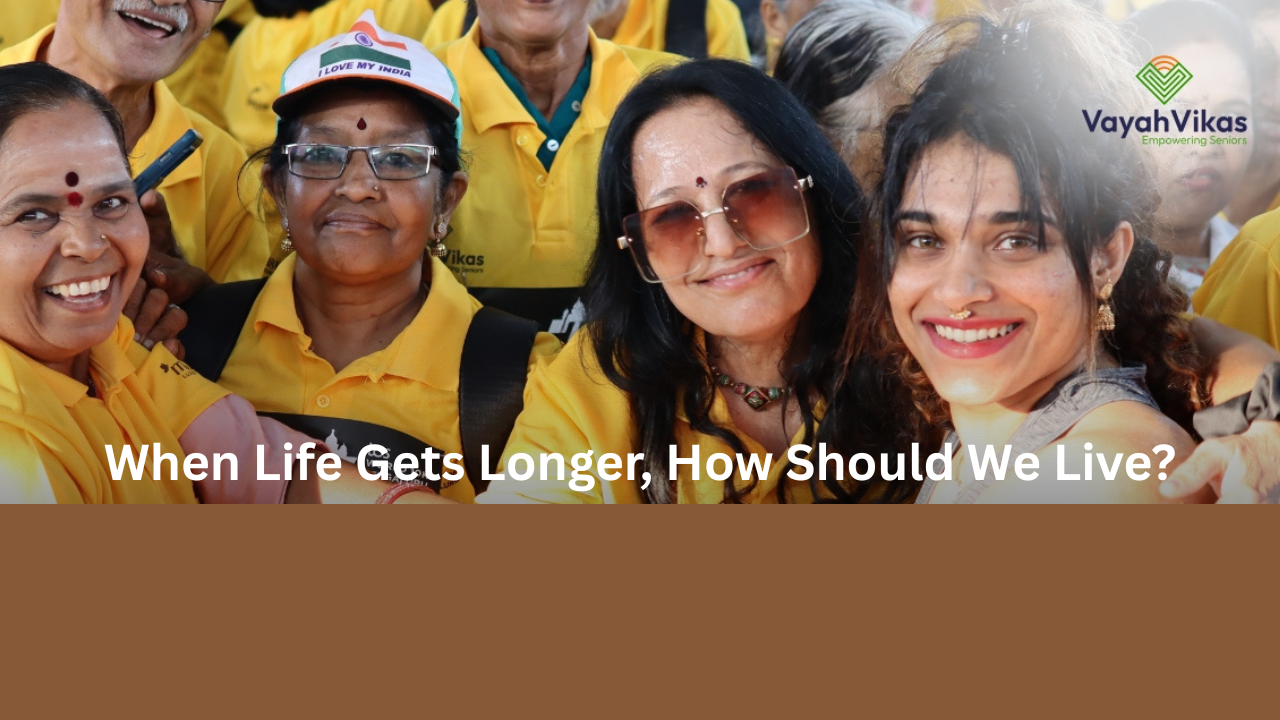
At Vayah Vikas, we meet many members in their sixties, seventies and eighties, and the conversations are always revealing. Although society tends to place them all under the broad label of senior citizens, it becomes clear that each decade brings its own experiences, shifts in identity and fresh learning. One topic that surfaces often is retirement. Members speak about how they viewed it before they reached it, how their understanding changed afterwards, and whether the idea of retirement itself makes sense in a world where people live much longer and remain active well into later life.
Living longer changes the shape of life, work and identity. In India, where longevity is rising and ageing is unfolding within a rapidly shifting social landscape, the way we think about later life needs a conscious reset.
What it means to live longer
A longer life is not just an extended old age; it expands the years in which people remain active and capable. Many continue to think sharply, work productively and participate fully in community life well beyond 60. As a result, careers, family roles, health priorities and social engagement stretch across a wider span. The real task is aligning expectations, skills and planning with a life that stays purposeful into the mid-seventies and beyond.
Mindset changes needed in the Indian context
Reframing later life as a period of renewal. Instead of imagining life after 60 as withdrawal, it helps to see it as a phase where people often start new pursuits or even new careers. The skills that served the first half of working life may not be enough, and continuous learning becomes essential.
Separating identity from employment. Job titles will shift and formal work may slow, but purpose cannot depend only on professional roles. Interests, contribution and community need to hold more weight.
Planning for independence. The older assumption that children will provide support is no longer reliable. Smaller families, migration and the pressures of modern work mean older adults need strong financial plans, accessible support systems and social networks of their own.
Investing in healthspan, not just lifespan. Preventive care, fitness and cognitive stimulation need attention long before retirement age. Early habits shape the quality of the extra years we are gaining.
Building social connection intentionally. As structured work recedes, loneliness can quietly set in unless people cultivate communities through clubs, learning groups, volunteering or shared-interest circles.
Should one think about retirement, and when?
Retirement deserves early thought, but it should be seen as more than a financial question. Planning rests on three pillars:
Financial: Saving from the early working years creates the foundation for independence, especially when post-employment life stretches for two decades or more.
Health: Habits built in the thirties and forties pay dividends by reducing the years of illness or dependency later.
Purpose and social life: By the mid-forties, it helps to reflect on what will give structure and meaning once formal work ebbs. Relationships, learning, leisure and contribution require time to build.
What form of retirement is needed today?
The old idea of a sharp cut-off at 58 or 60 no longer reflects how people live now. A more flexible model is taking shape:
Phased retirement: Gradual shifts to lighter schedules, project roles or advisory positions.
Second careers: New forms of work in the fifties and sixties, often mission-driven or flexible.
Skills-based engagement: Mentoring, teaching, consulting or entrepreneurship that draw on experience.
Active ageing: Routines built around movement, learning, creativity and community involvement.
Financially planned independence: Clear decisions on housing, healthcare, insurance and daily expenses.
Retirement today is not an endpoint but a transition into a second adulthood. Living longer calls for preparation that blends purpose, health and independence rather than stepping away from life.
Vayah Vikas creates a space where these questions about longer lives and evolving expectations can be explored with clarity and confidence. Through expert sessions on financial planning, programmes that strengthen healthspan, and opportunities for volunteering and mentoring, members find guidance as well as avenues to contribute. Regular learning activities, upskilling workshops and active participation in policy discussions help build a collective voice that speaks for the needs of India’s seniors. Equally important are the social connections fostered online, offline and at the Ekta Hub, where members engage, learn and support one another. To experience this community, consider becoming a member and visit www.vayah-vikas.org or call 9513300821.