
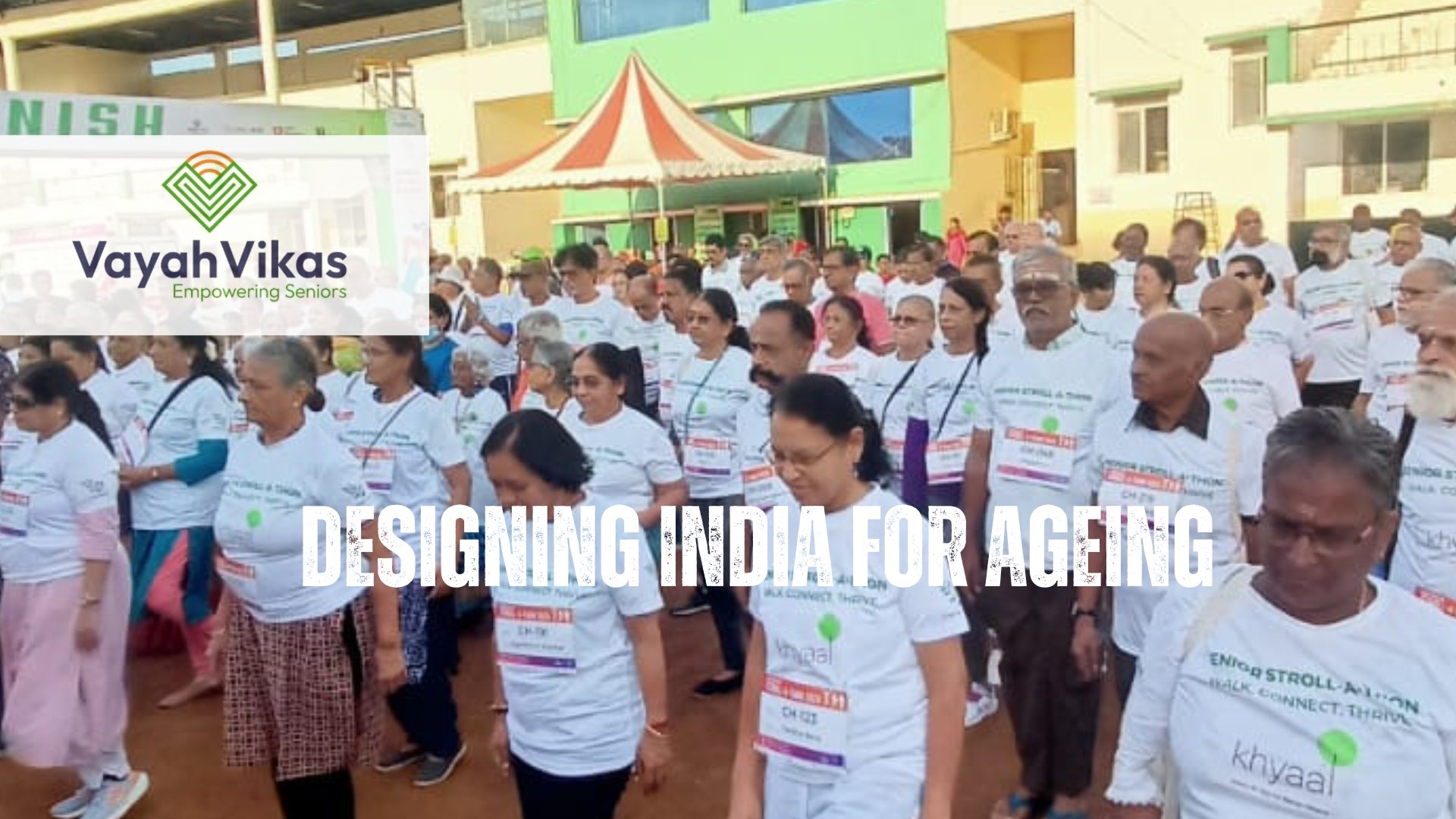
India is ageing quietly, rapidly, and unprepared.
We celebrate longevity as a national achievement. Life expectancy has risen, healthcare has improved, and more Indians are living well into their seventies and eighties. But beneath this success story lies an uncomfortable truth. We have added years to life without redesigning society for those years.
By 2050, India will have over 300 million citizens above the age of 60. That is nearly the population of the United States today. Yet most of our housing, cities, healthcare delivery, and social systems continue to assume that ageing is either short, supported by family, or someone else’s problem.
None of these assumptions holds anymore.
The quiet collapse of the old safety net
For decades, the joint family system compensated for the absence of formal elder infrastructure. That system has been steadily weakening under the pressure of urbanisation, migration, nuclear households, and longer working lives.
This is not a moral failure. It is a structural shift.
Children move cities or countries. Homes get smaller. Both spouses work. Care becomes fragmented, stretched, and often invisible. Even in loving families, elders increasingly spend long hours alone, navigating health, safety, and emotional needs independently.
Ageing has become a private struggle in a public silence.
Longevity without independence is not progress
Many older adults today are healthier, sharper, and more capable than previous generations. Yet they live in spaces that steadily reduce their confidence.
Uneven footpaths, inaccessible public transport, buildings without lifts, homes not designed for mobility or safety, and clinics that require long waits and travel. These frictions accumulate until independence quietly gives way to dependence.
Senior-first communities address this at the root. They are not about care homes or retreating from life. They are about environments where ageing does not automatically mean withdrawal.
Healthcare is a daily need, not an emergency event
India’s healthcare system is still oriented around episodic illness. For seniors, health is continuous. Chronic conditions, medication adherence, nutrition, mobility, mental health, and preventive care are part of everyday life.
When healthcare is embedded into the living environment, outcomes improve and crises reduce. Senior-first communities make this integration possible through proximity, coordination, and proactive monitoring.
This is not just better care. It is smarter care.
Loneliness is the next public health crisis
One of the least discussed aspects of ageing in India is loneliness. Studies globally link social isolation in older adults to higher risks of depression, cognitive decline, and even mortality.
Loneliness does not announce itself. It shows up as fatigue, disinterest, anxiety, and declining health.
Community is not a soft concept. It is protective infrastructure.
Shared spaces, peer interaction, purposeful activity, and opportunities to contribute restore a sense of belonging. Senior-first communities make connection the default, not an afterthought.
Seniors are assets, not dependents
India’s older generation includes former teachers, engineers, doctors, entrepreneurs, administrators, and caregivers. Decades of experience are being under-utilised because we have no structures that invite continued participation.
Well-designed senior communities can become centres of mentorship, volunteering, civic engagement, and intergenerational exchange. This is not about keeping seniors busy. It is about recognising their ongoing value.
A society that sidelines its elders loses wisdom it cannot replace.
Dignity must be designed, not improvised
Emergency response systems, accessible layouts, safe mobility, privacy, and autonomy do not happen by accident. Retrofitting ageing into existing homes is expensive, inefficient, and often too late.
Senior-first communities plan for dignity from the beginning. They reduce fear, uncertainty, and the burden on families who otherwise manage risk on their own.
This is not a niche solution
Senior-first communities are not only for the wealthy or the frail. They are part of the essential social infrastructure, like schools or hospitals.
They reduce long-term healthcare costs, allow predictable financial planning, and ease pressure on families and public systems. Most importantly, they give older adults control over how they live, not just how they are cared for.
The need is not twenty years away
Every year we delay, millions more enter old age in environments that were never designed for them. The result is reactive care, emotional isolation, and avoidable suffering.
Ageing is not a family failure. It is a societal responsibility.
At Vayah Vikas, we believe the question is no longer whether India needs senior-first communities. The question is whether we are willing to acknowledge ageing as a phase of life that deserves intention, dignity, and imagination.
India does not just need longer lives.
It needs better lives in those years.